Who is the poorest person in the world?
One can be named for owning billions; billions cannot be named for owning anything.
Jan 10, 2026
tl;dr: we can name the richest person instantly because extreme wealth requires nothing from us, but we cannot name the poorest because doing so would transform poverty from a statistical tragedy we can ignore into a specific person whose suffering becomes our direct, daily failure to act.
ýezî âish nôit urvânê
advå aibî-dereshtâ vaxyå
at vå vîspêñg âyôi
ýathâ ratûm ahurô vaêdâ
mazdå ayå ãsayå
ýâ ashât hacâ jvâmahî.When you really understand something clearly and that understanding isn’t mixed up or wrong, then things automatically fall into a clear pattern.
Yasna 31, verse 2 (my commentary)
Who is the poorest person in the world?
The modern world has little difficulty recognizing success.
Enormous wealth is not only accumulated but carefully recorded, ranked, and made public. Names are attached to numbers, numbers to narratives. Although such figures are estimates and fluctuate over time, they are treated as authoritative enough to anchor global attention.
Extreme accumulation becomes legible by default, not because of who holds it, but because the systems we rely on are built to see and measure it. That is why the richest person in the world can be identified almost instantly with a degree of precision that feels natural and unquestioned.
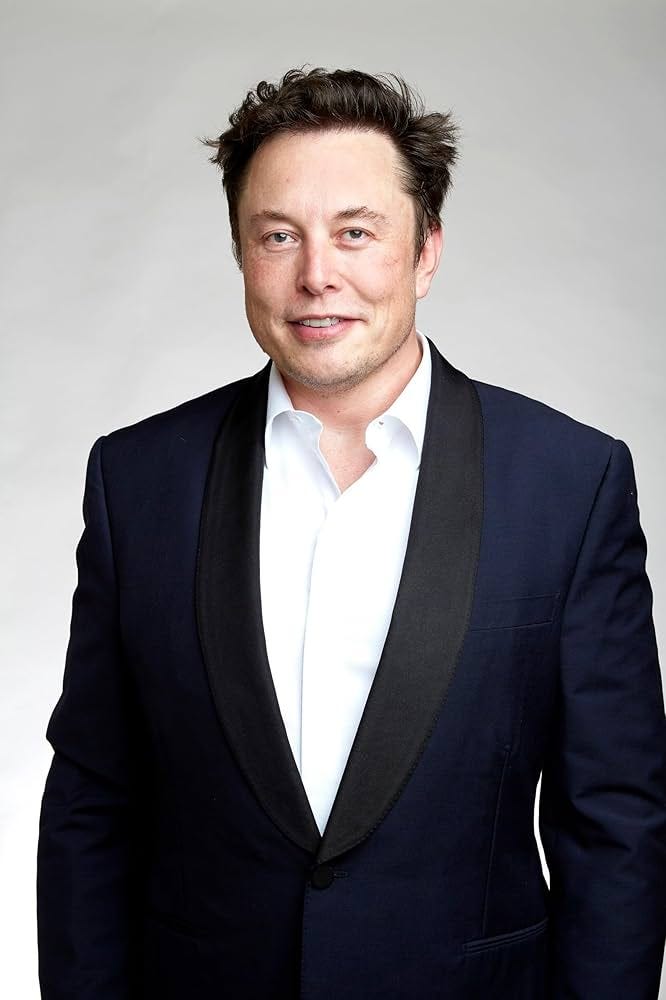
Elon Musk is the world’s richest person (as of January 10, 2026) according to widely accepted public estimates that illustrate how modern systems render extreme accumulation highly visible and continuously measurable. (His visibility corresponds to the scale at which resources are marshaled to build technologies that affect millions of lives.)
The irony appears when we ask the inverse question.
When people ask who the poorest person in the world is, an answer sometimes emerges that feels strangely complete. Jérôme Kerviel is often labeled “the poorest man alive” because he was held liable for billions in trading losses.
This designation refers to nominal indebtedness1, not to a life of hunger, displacement, or material deprivation2. It is invoked here deliberately as a contrast. His poverty is legible because it is numeric, institutional, and attached to a single individual who exists fully within formal systems.
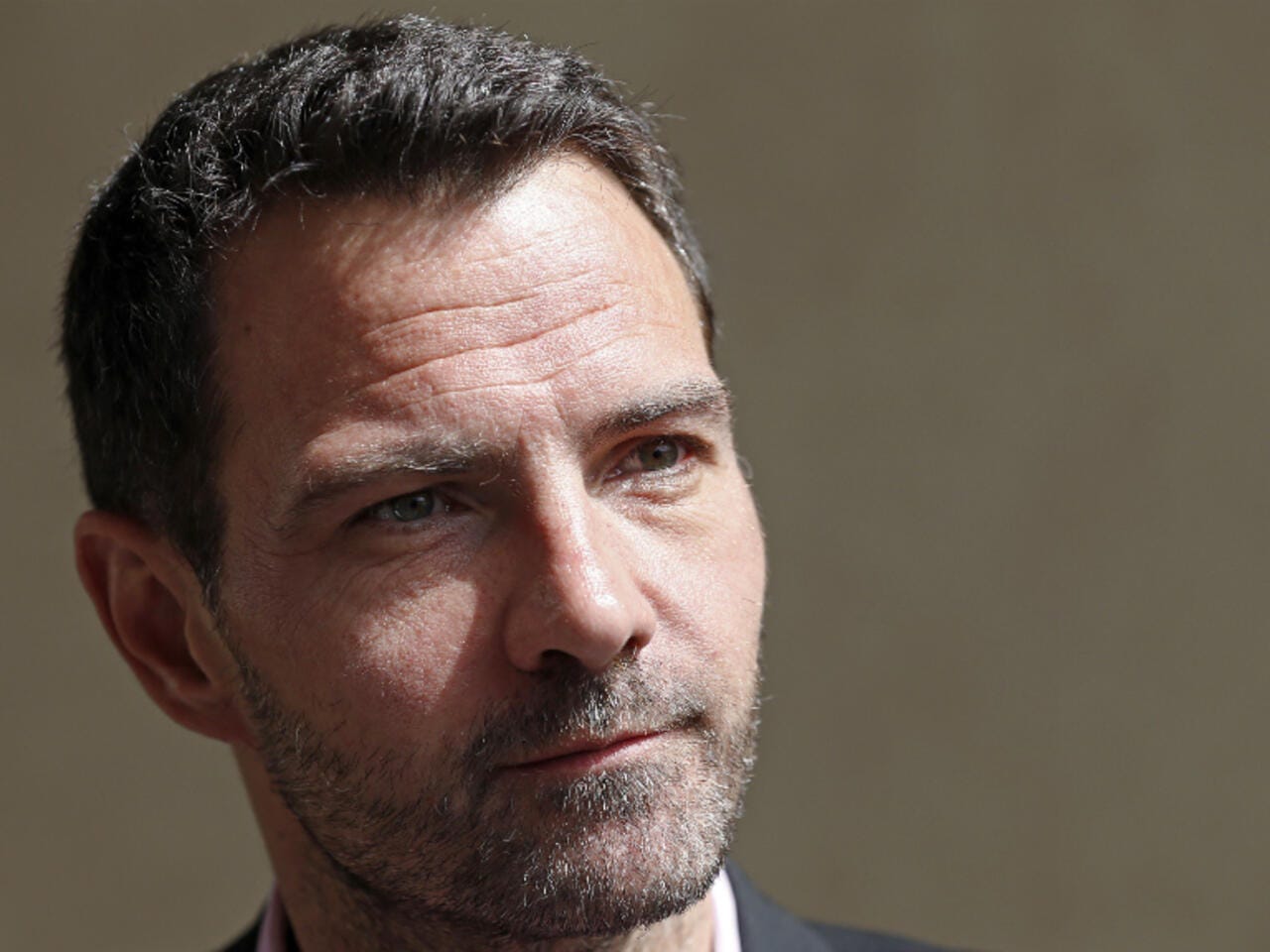
Jérôme Kerviel, often called “the world’s poorest man”, because his nominal debt is measurable and attached to a single name, not because of lived material deprivation.
But when the question is asked in the sense most people intuitively mean it, the answer disappears.
The poorest person in the world in terms of hunger, disease, displacement, and lack of shelter cannot be individually identified in any stable or authoritative way. They exist by the millions. Often, in regions where institutions are fragile, records are incomplete, or borders are unstable. This is not a logical impossibility but a structural one.
The difficulty of naming the poorest person is itself the evidence. The systems we use to know the world do not function well at the extreme margins of deprivation.
The richest person presents no such difficulty. Elon Musk is not merely wealthy but continuously visible. His net worth is marked-to-market and translated into charts and headlines. This visibility makes no claim about moral worth or how capital is deployed. It reflects something more basic. Large-scale accumulation occurs within systems designed to record, protect, and publicize it. Wealth produces legibility.
Extreme poverty often coincides with the opposite condition. Displacement, informality, conflict, and institutional breakdown complicate efforts to track lives. The poorest people frequently exist outside stable systems of registration and measurement.
What cannot be easily counted becomes difficult to recognize. What is difficult to recognize becomes easy to overlook.
We sometimes explain this absence by appealing to dignity or privacy. We say that naming the poorest would be intrusive or demeaning. But this explanation does not hold up. People with little are subjected to intense scrutiny. Their eligibility, compliance, and behavior are monitored by courts, welfare offices, and enforcement systems. Poverty is not unseen. It is observed constantly, but in ways that fragment responsibility rather than clarify causes.
What is missing is recognition. The poorest are visible as cases, risks, and administrative units, not as individuals whose condition demands explanation. Meanwhile, a trader whose losses can be expressed as a single number becomes a global symbol of poverty because his suffering aligns with the forms of knowledge we already trust.
This is the deeper irony. A person can be named the poorest in the world because his debt is legible, while those who lack food, water, and safety cannot be named at all. One form of suffering fits inside our accounting systems. The other exists where those systems break down.
For those familiar with the Gathas, this points to a more fundamental issue.
In early Zoroastrian thought, ethics don’t come first. Truthful description does.
Moral and political judgment presuppose an honest account of reality. When understanding is distorted or incomplete, judgment loses legitimacy before it becomes unjust. This framework is invoked here not as theology but as an epistemic standard3.
The meaning of Yatha Ahu Vairyo reflects this logic. Authority is not claimed through power or recognition. It is earned through alignment with truth and responsibility toward those most exposed to harm. Leadership that cannot perceive the consequences of the world it shapes lacks the standing to judge them.
Measured by that standard, a world that can identify its richest person instantly but cannot identify its poorest reveals a serious failure. It is not a failure of compassion but of knowledge. We have built systems capable of tracking excess with extraordinary precision. Yet, we struggle to locate deprivation at its most extreme.
The poorest person in the world, then, is not simply the one with the least money. It is the one whose life exists at the edge of legibility itself, visible only at moments of enforcement or crisis, and invisible whenever recognition would require accountability.

This is what AI hallucinated. But there is no photograph of ‘the poorest person in the world’.
We know who the richest person is because recognition at the top reinforces confidence in the system. We can’t name the poorest person because recognition at the bottom would force us to question how that system works.
If legitimate moral and political authority depends on truthful description, by what authority does a world continue to judge outcomes it cannot adequately see?4
Imagine you break a very expensive vase in a museum.
On paper, the sign states that the vase is worth ten million dollars, so a form is completed stating that you “owe” ten million dollars. That number is written down somewhere official.
But you do not actually have ten million dollars. No one expects you to repay it. You still live your normal life, go to work, buy groceries, and sleep in your own bed.
That written-down number is nominal indebtedness.
It means:
-
You are said to owe a huge amount on paper
-
The number exists in records and headlines
-
But it does not describe your real, everyday life or material conditions
So someone can be called “the poorest” because of a giant number written next to their name, even if they are not hungry, homeless, or struggling to survive.
That is distinct from real poverty, which is about not having enough food, safety, or shelter, even if no large number is recorded anywhere.
Material deprivation means not having the basic things you need to live a normal, safe life.
Imagine trying to get through your day, but:
-
You don’t have enough food to feel full
-
You don’t have clean water when you’re thirsty
-
You don’t have a safe place to sleep
-
You don’t have medicine when you’re sick
-
You don’t have shoes, heat, or electricity when you need them
That is material deprivation.
It is not about big numbers on paper or the money you owe.
It is about real things missing from everyday life.
Someone experiencing material deprivation might not appear on any wealth or debt list at all. There may be no exact number attached to them. However, their lives are increasingly difficult every day because the basics are missing.
So in simple terms:
-
Nominal indebtedness is a big number written next to your name.
-
Material deprivation is the lack of what is necessary to survive.
An epistemic standard is a rule for knowing whether something really makes sense before you act on it.
Imagine you are a teacher grading homework.
Before you decide if an answer is “good” or “bad,” you first ask:
-
Did the student actually understand the question?
-
Are they describing the problem correctly?
If the student misunderstood the question, then grading their answer is unfair. You can’t judge the answer until you’re sure the problem was understood properly.
That rule (understand first, judge second) is an epistemic standard.
So, in very simple terms:
-
Epistemic means “about knowing or understanding.”
-
Standard means “a rule you must meet.”
An epistemic standard says:
“Before you judge, decide, or punish, you must first be sure you’re seeing the situation clearly.”
In the essay, the idea is that if a system cannot accurately describe who is suffering and why, then it fails the epistemic standard and anything it subsequently judges is not trustworthy.
It’s like grading answers to the wrong question and still claiming the grade is fair.
As the one fit to guide the camels is chosen,
so the measure of judgment is set from what is true.
Through good understanding, action is shaped,
in alignment with knowing.
And authority belongs to the one they establish
as guardian of the weakest in the caravan.
My interpretive poetic translation of Yatha Ahu Vairyo grounded in camel (Zarath - “ustra”) pastoral reality and emphasizing accuracy of meaning.
Who is the poorest person in the world?
whois thepoorestpersonintheworld.com